A connected agricultural ecosystem.
Crops, livestock, soil care and daily operations run as one system — maize, vegetables and coffee anchor the fields, while poultry, goats and cattle bring diversity and welfare-led care.
A mixed agricultural enterprise.
A region known for agriculture.
Through field preparation, planting, tending, harvesting and seasonal planning, our crop system provides the foundation for food resilience and livestock support.
- Maize cultivation
- Seasonal vegetables
- Soil management
- Crop residue use
- Potential organic production
- Future value-added pathways
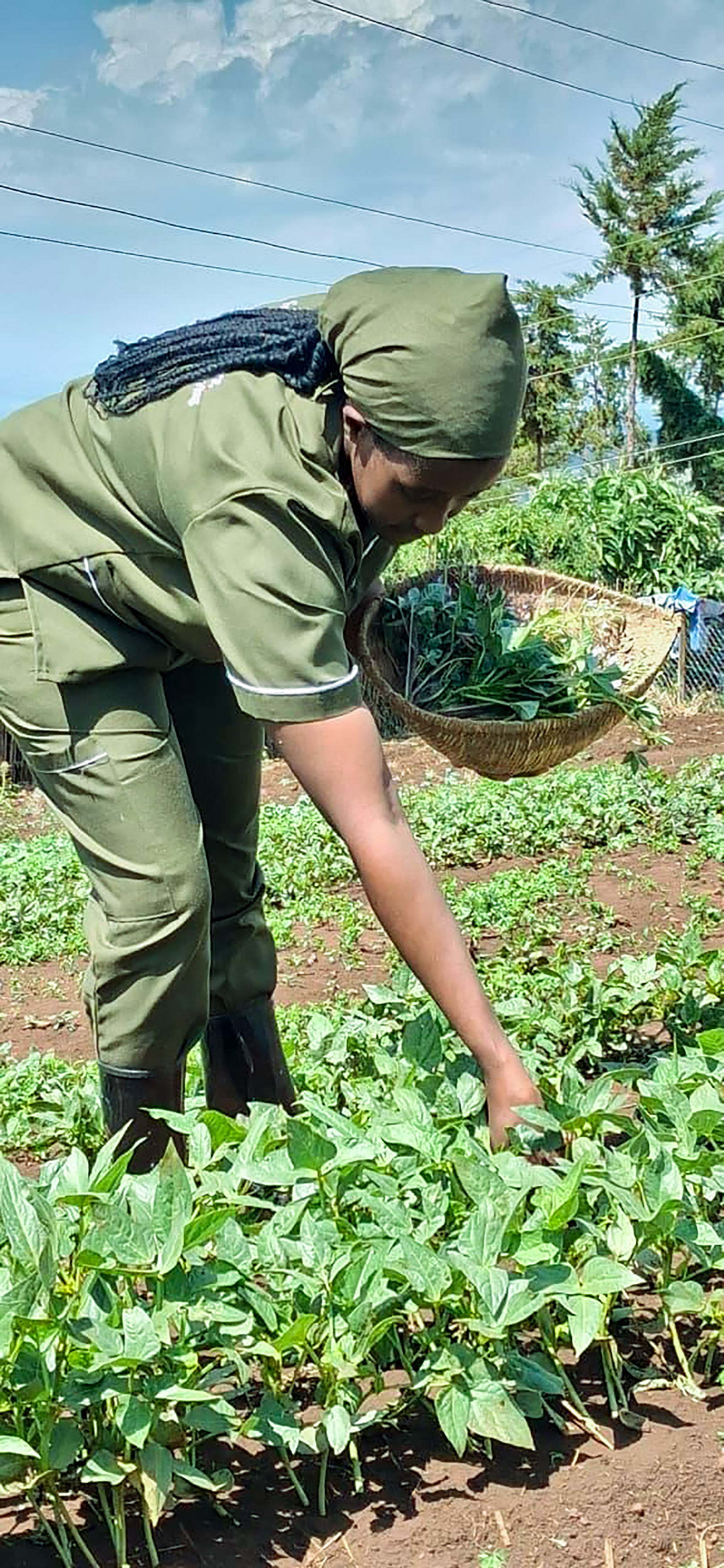
Every element serves a greater role.
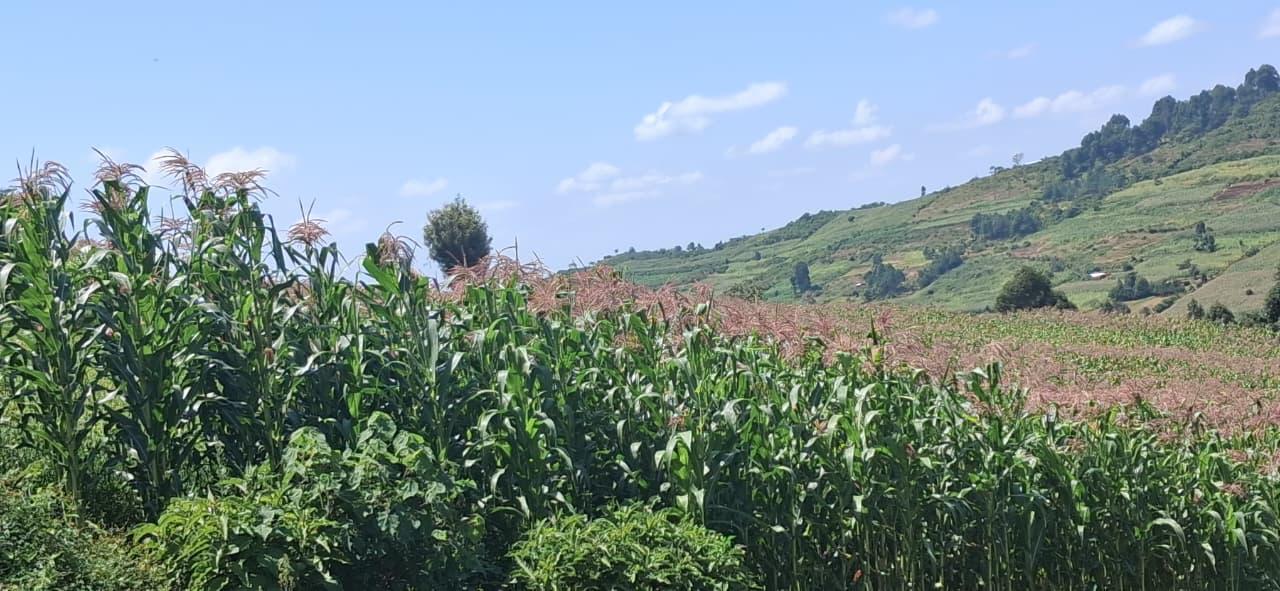
Cultivating food from the ground up.
Crop production is central to Elaria's identity. Maize forms the main agricultural base, supported by vegetable plots that add diversity, nutrition and everyday productivity.
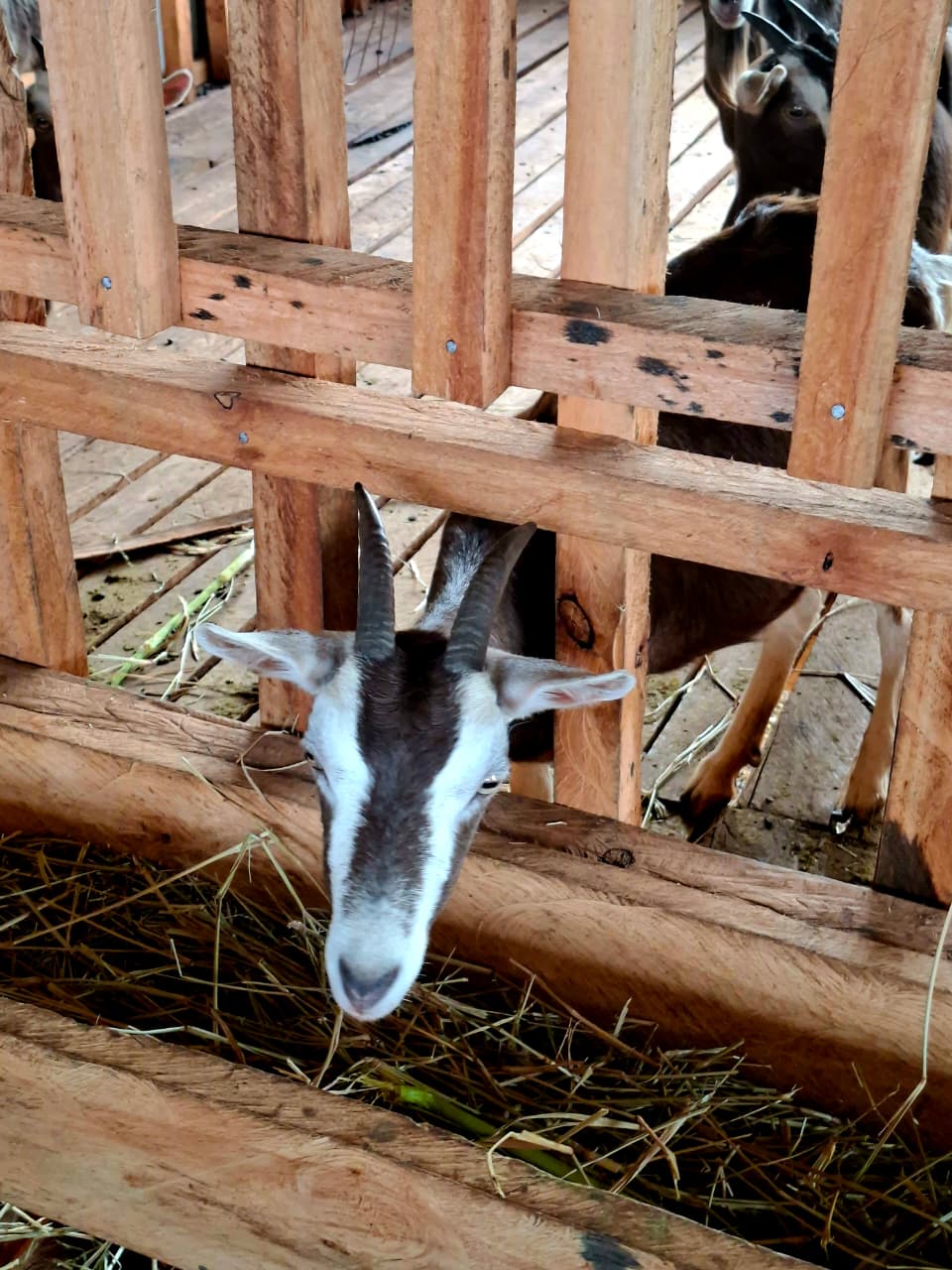
A diversified animal-care system.
Poultry, goats and cattle each play a different role in the farm's wider ecosystem — supporting food production, income potential, learning and manure generation.
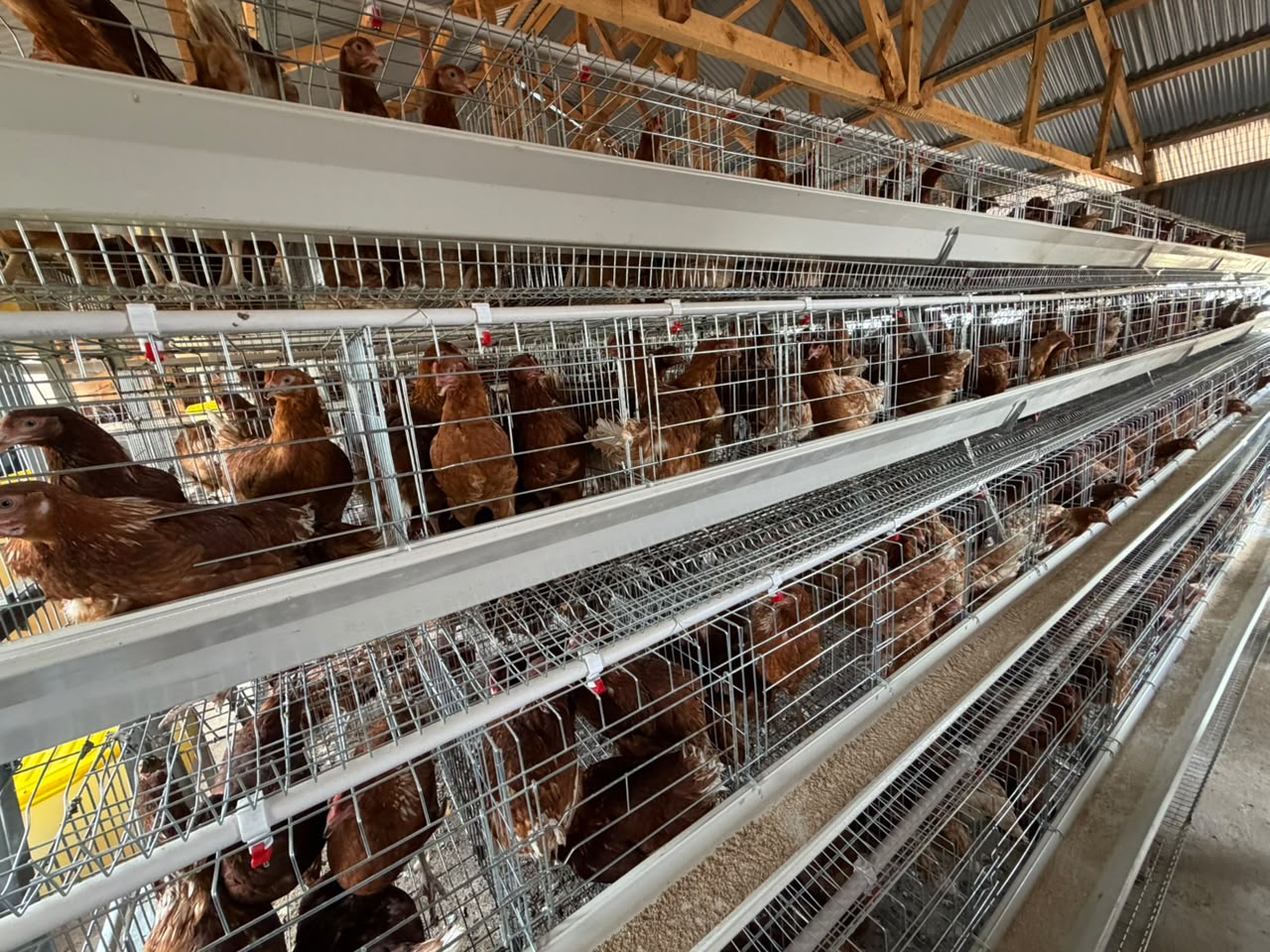
Mixed poultry for food, diversity and farm activity.
A mixed flock of chickens, turkeys, ducks and geese gives the farm multiple production possibilities — from eggs and meat to breeding and household food supply.
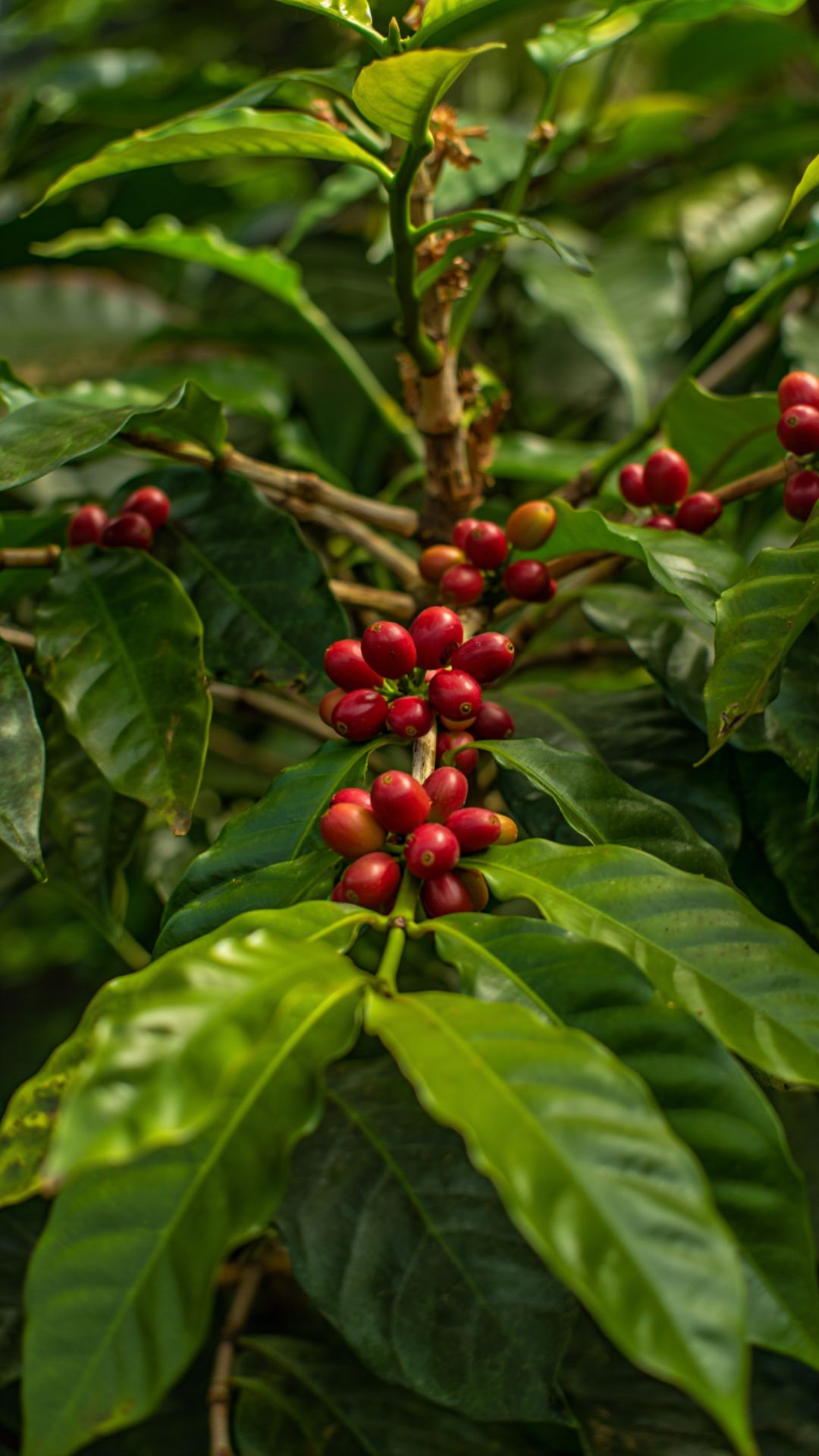
Shade-grown coffee, hand-picked with care.
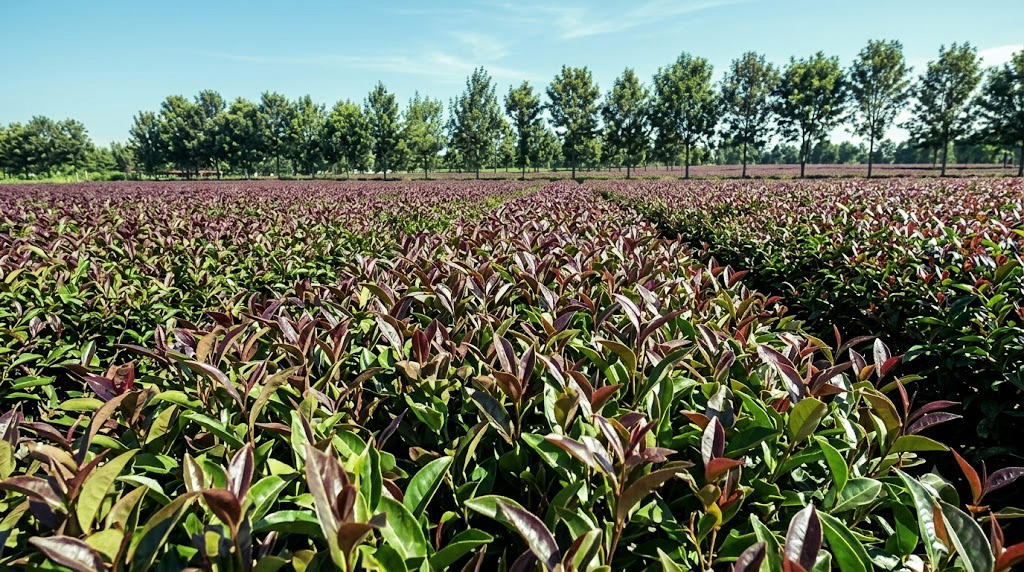
Rows of Arabica coffee trees add a perennial cash crop to the farm — thriving under Trans-Nzoia's highland climate, hand-picked at peak ripeness and processed on-site for quality-forward beans.
Shade-grown Arabica coffee trees add a perennial cash crop to the farm — hand-picked at peak ripeness, pulped and dried on-site for quality-forward beans.
A flexible livestock unit supporting meat, breeding, manure use and practical farm demonstrations.
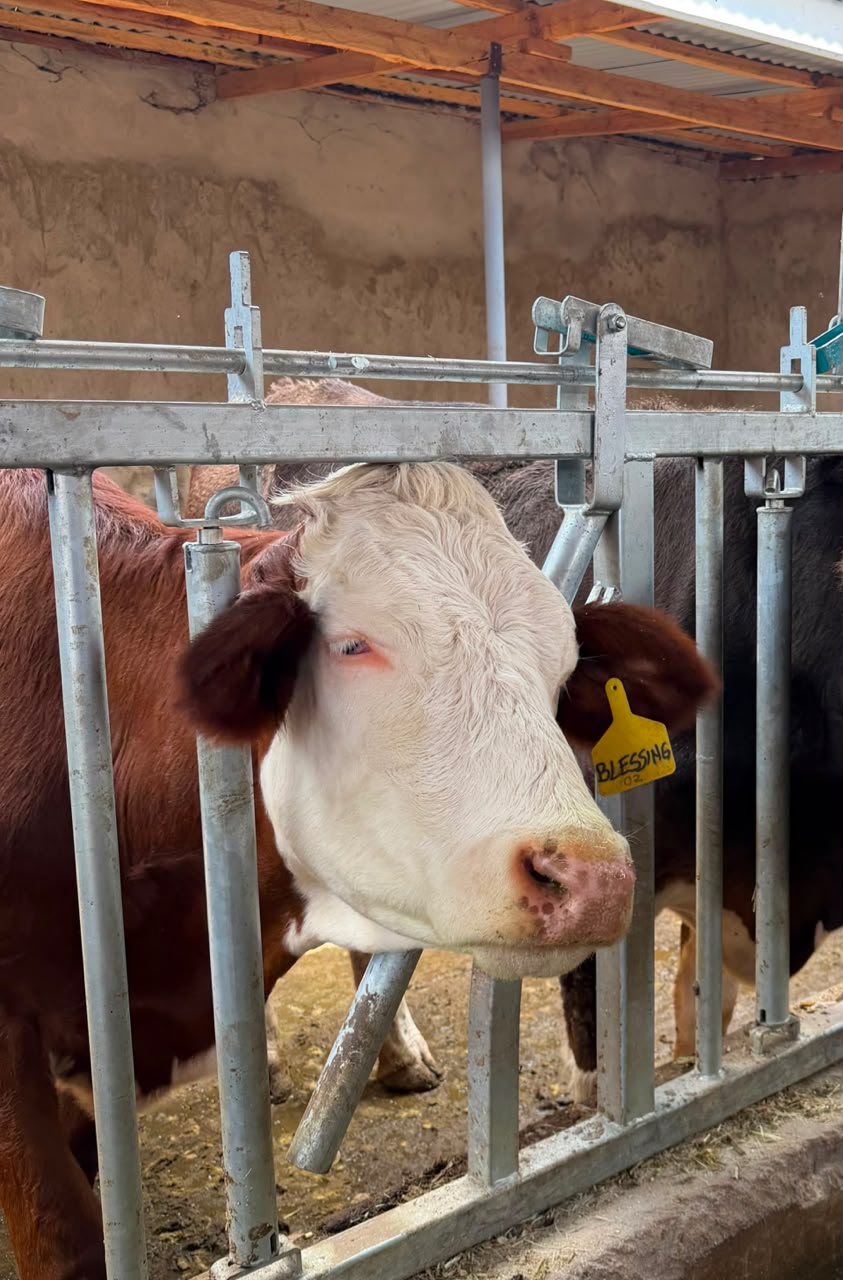
Our Fleckvieh cattle are the farm's larger livestock layer — a dual-purpose breed prized for both milk and meat, supporting manure production and wider farm value.
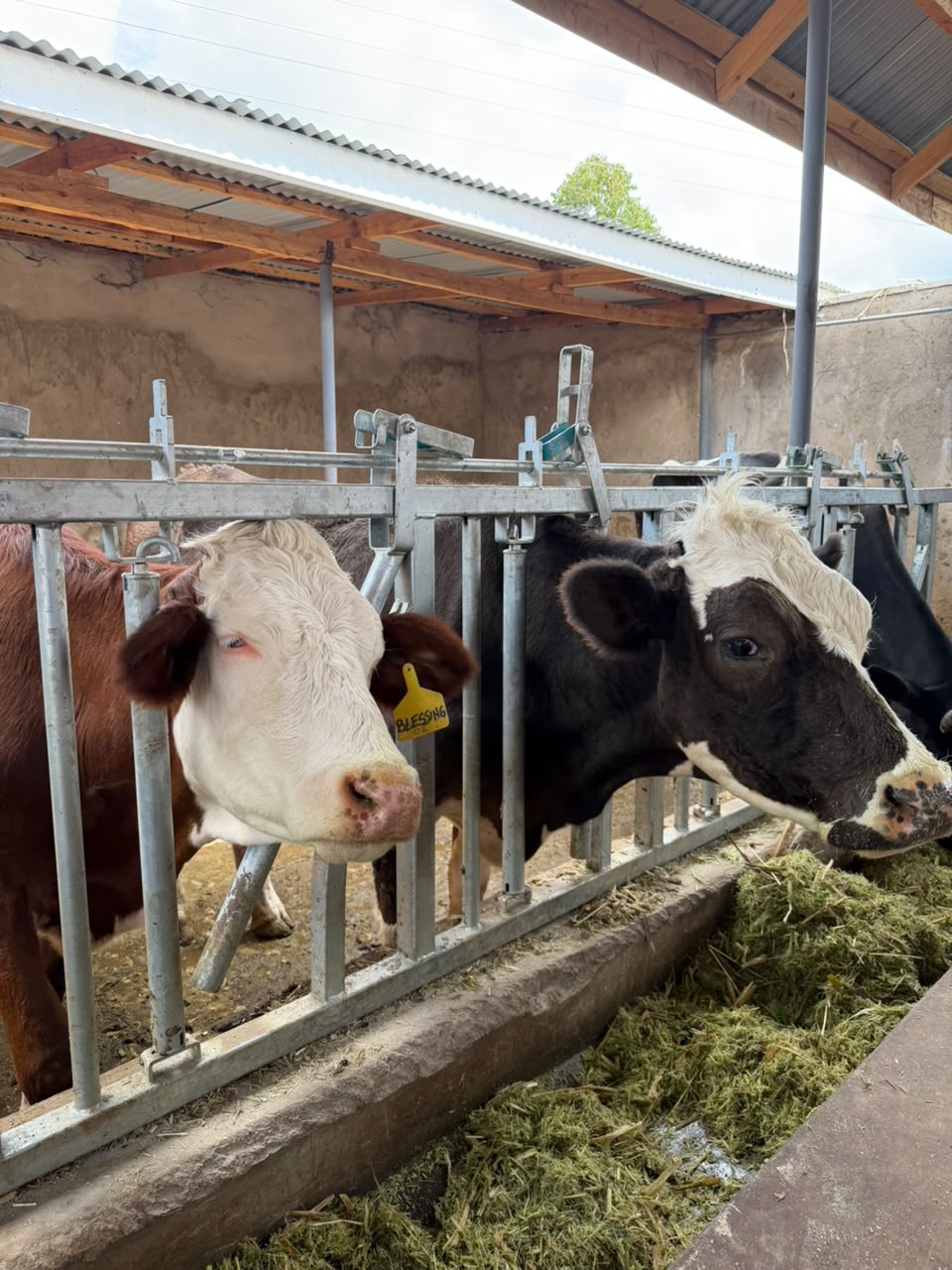
Fleckvieh cattle, feed and shelter — part of the same daily rhythm.
Nothing works in isolation.
Crop residues support livestock feeding. Animal waste supports composting and soil fertility. Maize and vegetables strengthen food output. Livestock adds diversity and commercial flexibility.
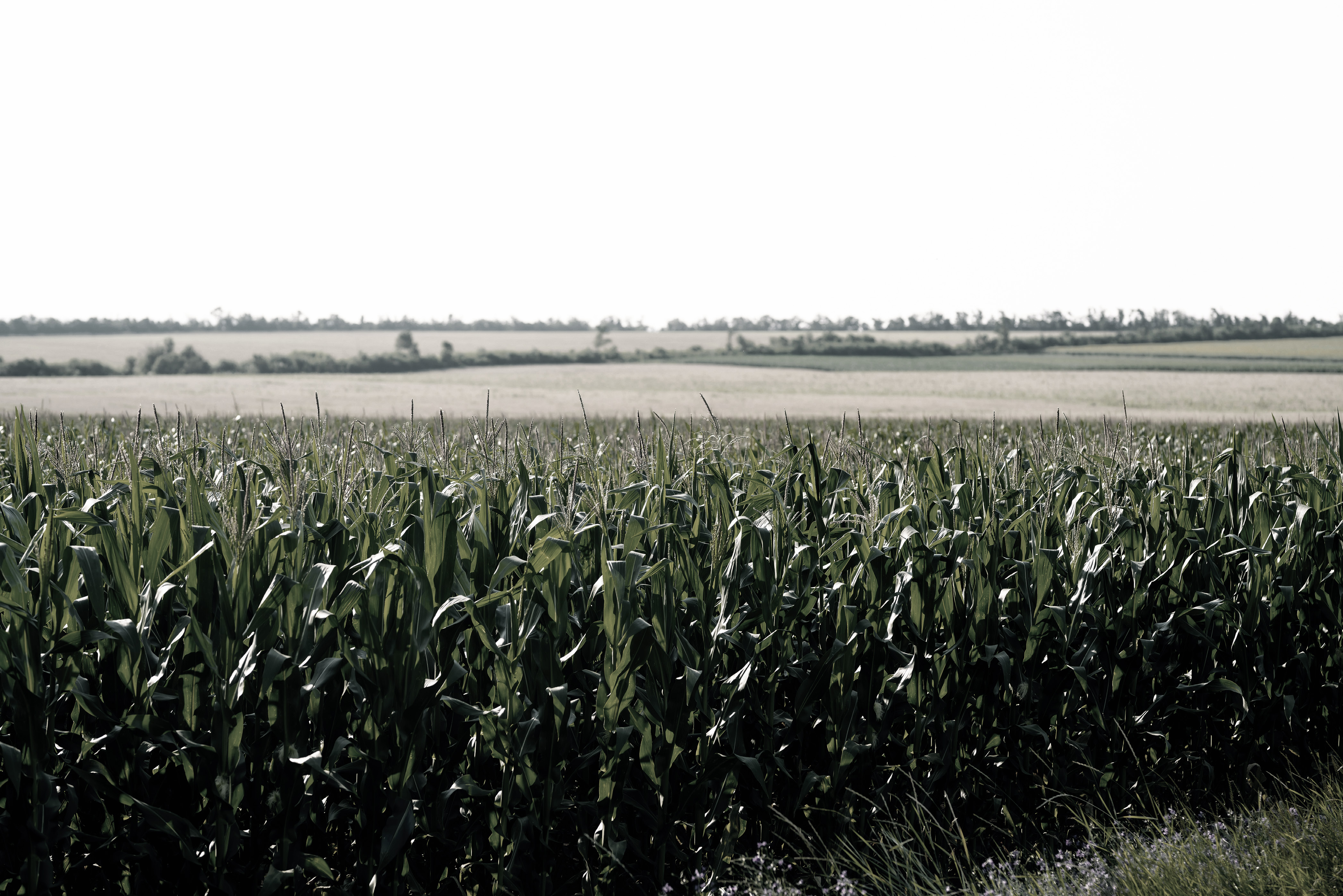
A farm that is more adaptive, useful, and future-ready.
This circular model supports resilience. Together, our crop and livestock elements create a farm system where every area contributes to the next stage of growth.